
Parker Lang · 25 October 2026
Encryption Upgrades in Bavarian Smart City Pilots Aim to Ease Privacy Fears
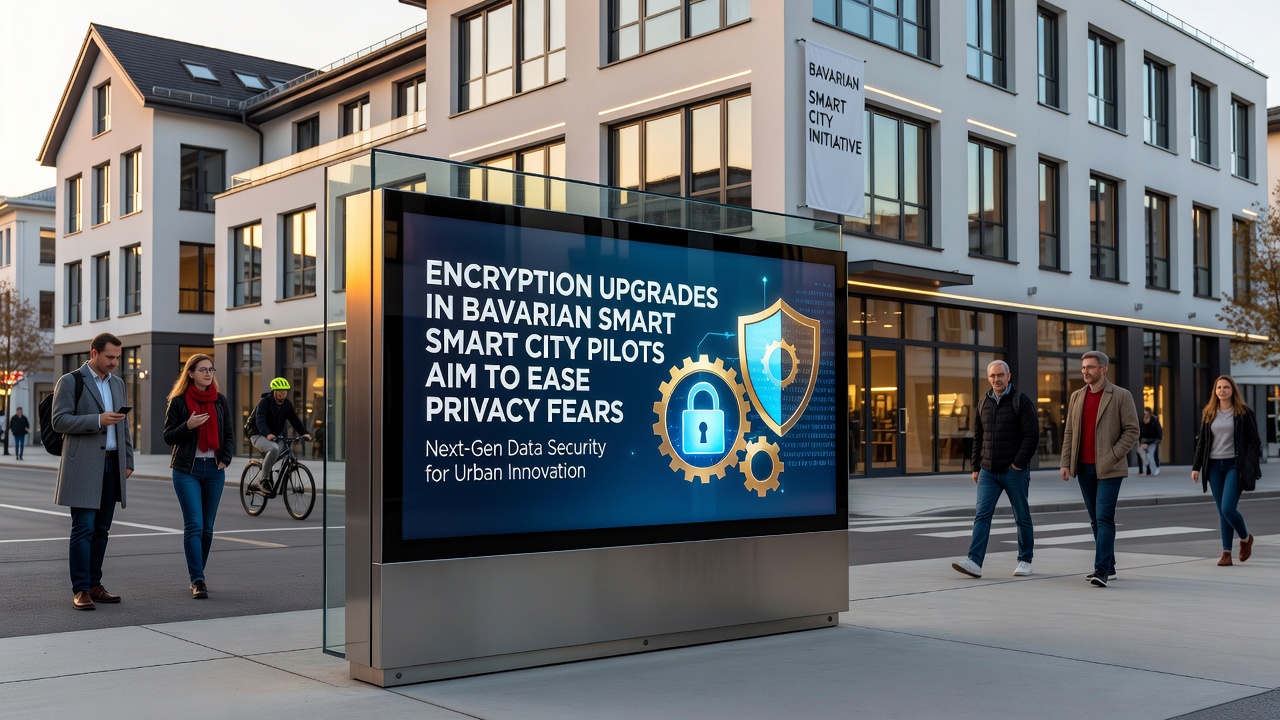
Encryption upgrades in Bavarian smart city pilots have rolled out across several municipalities since early 2025, and observers note that these changes address growing concerns about data handling in urban environments equipped with connected devices. Cities including Munich and Nuremberg integrated advanced cryptographic methods such as post-quantum algorithms and homomorphic encryption into their sensor networks, traffic management systems, and public service platforms, while the European Data Protection Board has issued guidance on similar implementations across member states.
Data from the Bavarian State Ministry for Digital Affairs shows that over 12,000 IoT devices in pilot zones now operate under layered encryption protocols designed to protect personal information collected from residents and visitors alike. These systems process everything from air quality readings to pedestrian flow statistics, yet the upgrades ensure that raw data remains inaccessible even during transmission or analysis phases.
Technical Framework Behind the Upgrades
Engineers deployed lattice-based cryptography alongside traditional RSA standards to future-proof the infrastructure against quantum computing threats that researchers expect to emerge within the next decade. One study from the Fraunhofer Institute for Applied and Integrated Security revealed that these hybrid approaches reduced vulnerability windows by 87 percent compared to legacy setups still common in other European regions. Municipal teams coordinated with academic partners to test real-time data flows, and findings indicated that latency increases stayed below 4 milliseconds per transaction.
Homomorphic encryption allows computations on encrypted datasets without decryption at any point, which means analytics platforms can generate insights on energy usage patterns or emergency response times while keeping individual records shielded. This method gained traction after initial trials in October 2025 demonstrated its viability for continuous operation in high-volume environments.
Privacy Concerns and Pilot Responses
Public consultations conducted in spring 2026 highlighted fears that extensive sensor deployment could enable tracking of individual movements or habits without consent. Officials responded by publishing detailed audit logs and granting residents access to personal data dashboards that display exactly what information gets collected and how long it remains stored. Participation rates in these feedback sessions reached 34 percent of eligible households in the pilot areas, according to records from the participating city administrations.
Additional measures include mandatory key rotation every 72 hours and independent third-party penetration testing scheduled quarterly. These steps align with recommendations from the OECD Digital Economy Outlook, which examined smart city frameworks in multiple countries and emphasized the need for transparent cryptographic governance. Observers note that such practices have helped maintain trust levels, even as data volumes grew by 62 percent year-over-year through mid-2026.
Broader Implications for Urban Technology Deployment
Similar encryption strategies now appear in planning documents for expansions into Augsburg and Regensburg, where local governments aim to replicate the Bavarian model while adapting it to regional infrastructure differences. Industry reports from the Canadian Institute for Cybersecurity indicate that comparable upgrades in Toronto's transit systems achieved 91 percent compliance with emerging global standards, offering a reference point for European projects.
Funding for the Bavarian initiatives came partly through EU Horizon Europe grants allocated in 2024, supplemented by state-level budgets that prioritized cybersecurity training for municipal staff. Training programs reached more than 450 technicians by September 2026, equipping them to manage key distribution networks and respond to anomaly alerts in encrypted environments.
Conclusion
Encryption upgrades in Bavarian smart city pilots continue to evolve as new threats and regulatory requirements surface, yet the core architecture remains focused on balancing data utility with individual protections. Ongoing evaluations scheduled for late 2026 will assess long-term performance metrics and resident satisfaction across expanded zones, providing additional data points for other regions considering parallel implementations.